Every so often, finance adopts a technology that changes how the business is done. Electronic trading did it in the 1990s. Tokenisation is doing it now, and the Cayman Islands has more riding on the outcome than almost any other jurisdiction.
For those who aren’t familiar, tokenisation means recording ownership of an asset on a blockchain, the technology that underpins cryptocurrencies. Instead of entries in a register kept by an administrator, ownership takes the form of a digital token that can transfer in seconds. The asset itself does not change. A tokenised share in a fund is still a share in a fund, with the same rights and the same regulation. What changes is the plumbing. Settlement that once took days happens almost instantly. Records can reconcile automatically. Distributions can be paid without manual processing.
The use of tokenisation is increasing rapidly. Tokenised real-world assets, excluding stablecoins, have grown from around US$5 billion at the start of last year to almost US$40 billion today, according to RWA.xyz. Tokenised money market and treasury products alone passed US$13 billion this year, with the world’s largest fund managers, including BlackRock and Franklin Templeton, already in the market. Industry forecasts put the total at US$10 trillion by 2030.
Why does this matter here? Because funds are at the core of Cayman’s financial services economy. At the end of June, Cayman Islands Monetary Authority (CIMA) figures showed 31,145 regulated funds were domiciled in the jurisdiction, far more than any other tax-neutral competitor. Those funds hold US$9 trillion in net assets. Research by Capital Economics last year found that funds account for almost half of all financial services employment in Cayman, while financial services in turn generate almost two-thirds of government revenue once indirect effects are included. When the plumbing of the funds industry changes, the world’s largest fund domicile should be the one setting the standard.
If tokenisation becomes the default way to issue and transfer fund interests, every manager will face the same decision about where those funds should live. Luxembourg, Singapore and the UAE have built regimes to attract them, and they are serious about it. For most, though, the practical answer is already Cayman. Their structures sit here, alongside the lawyers, administrators and auditors who look after them, in front of investors who know the jurisdiction well. Since March, when amendments to our legislation confirmed that a tokenised fund interest is treated as what it is, a fund interest regulated by CIMA under the same framework as the rest of the industry, tokenising has become a straightforward exercise in Cayman: a manager can upgrade the legal vehicle they already run, keeping its governance and service providers in place while moving its interests onto modern rails.
The early evidence backs this up. Thirteen tokenised funds are now registered with CIMA, up from nine earlier this year, among them the first tokenised fund from Fidelity International. Cayman is also home to roughly 58% of the world’s crypto and digital asset hedge funds and a thriving web3 ecosystem, so the managers most likely to tokenise are already here.
None of this happened by accident. Cayman earned its current position by collaborating with industry, government and the regulator to deliver the products that global finance demands. The March framework is the latest proof of that.
The task now is to keep making the decisions that future-proof our financial services industry. The groundwork is laid, the first movers have arrived, and the number of tokenised funds launching in Cayman is expected to increase significantly from here.
This article was first published by the Cayman Independent where Cayman Onchain is the new monthly column by Haymond Rankin, Associate Director for Banking, Fintech and Virtual Assets at Cayman Finance which explores crypto, tokenisation and the evolving digital asset landscape, with a particular focus on developments relevant to the Cayman Islands.
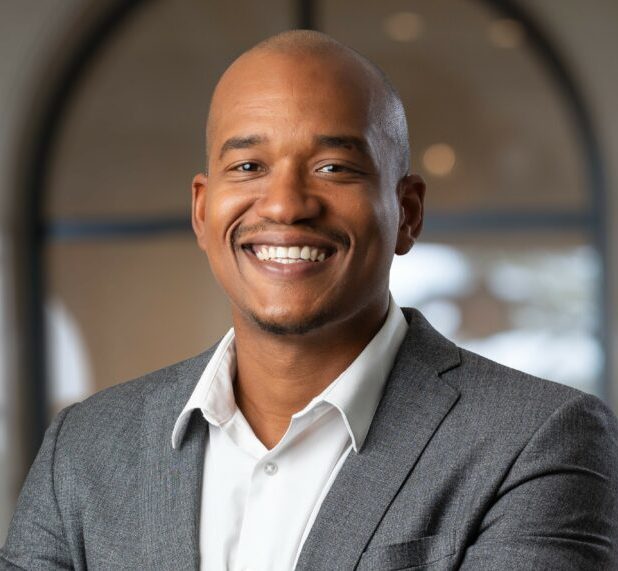
Haymond Rankin is the Associate Director for Banking, Fintech and Virtual Assets at Cayman Finance, where he leads strategy and advocacy on digital asset regulation and innovation.