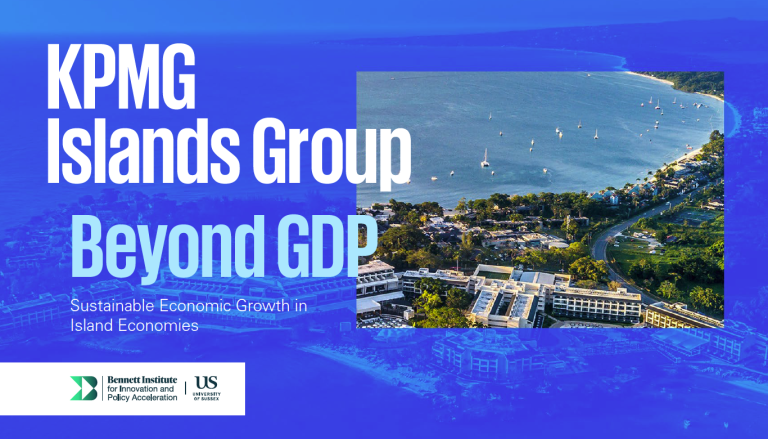
The Cayman Islands’ strong public finances and position as a major global financial center provide a solid foundation for growth, but rising housing costs, economic concentration and exposure to severe weather could threaten its long-term resilience without increased investment in infrastructure and skills, according to a new KPMG report.
KPMG Islands Group’s ‘Beyond GDP – Sustainable Economic Growth in Island Economies’ examines the pressures facing 12 jurisdictions and argues that governments should assess prosperity using more than traditional measures of economic output. The research, led by Professor Matthew Agarwala, identifies economic concentration, climate and environmental risks, inflationary pressures, demographic change, data gaps and limited global influence as common challenges for island economies.
For Cayman, KPMG identifies climate-resilient infrastructure, affordable housing and skills development among the main priorities. The report says the jurisdiction’s prosperity is underpinned by its strong fiscal position and “systemic importance to the global asset management sector,” but warns that concentration in key industries leaves the economy vulnerable to external shocks.
Infrastructure investment is another major focus. KPMG calls for improvements in energy and digital connectivity. The report cites earlier Cayman estimates indicating that every $1 invested in construction generated $2.56 in economic output, but cautioned that infrastructure spending requires long-term planning, rigorous business cases and transparent procurement to deliver lasting benefits.
Climate adaptation should also be treated as an economic investment rather than solely an environmental issue, the report argues. For Cayman, KPMG recommends nature-based measures including coral reef restoration, mangrove protection and sustainable coastal planning, saying these could reduce storm-surge risks while protecting ecosystems that support tourism.
The report also emphasises the importance of protecting Cayman’s reputation as an international financial centre. KPMG says maintaining the credibility of the islands’ institutions, rule of law and international connections will remain important to attracting investment. It specifically points to compliance with international tax-transparency standards and regulatory stability, while recommending continued investment in digital skills and infrastructure to support the financial services sector.
Healthcare and demographic planning feature among the areas where Cayman is already taking steps highlighted by the study. KPMG points to the islands’ public and private healthcare services, Health City Cayman Islands, workforce development efforts and planning across housing, agriculture and infrastructure as examples of measures that can strengthen human capital and help address demographic pressures.
Central to the report is what KPMG calls the “Planetary Wealth Framework,” which proposes measuring not only GDP but also the assets that support future prosperity. Those include natural, human, social, institutional, physical and knowledge capital. Under that approach, sustainable growth means increasing productive assets per person rather than focusing only on current income.
“Investing in skills development and key areas such as climate resistant infrastructure, tackling housing costs and investing in nature-based coastal protection are strategies which can improve Cayman’s economic sustainability in the long term,” Wanda Mellaneo, country leader for KPMG in the Cayman Islands, said in the report.
KPMG also argues that island economies can achieve greater scale by collaborating on areas such as data, procurement, infrastructure expertise and access to capital. The report recommends stronger statistical systems and regional cooperation as part of a broader effort to make island economies more visible to international investors and institutions and better equipped to withstand economic and environmental shocks.