Private credit has rarely been out of the financial headlines this year, raising questions about hidden risks and the regulatory treatment of the asset class. For insurers and reinsurers, in turn, private assets have been one of the most significant opportunities, offering yield, diversification and structural advantages that conventional fixed income simply could not match, while still supporting insurers’ long-term obligations to policyholders.
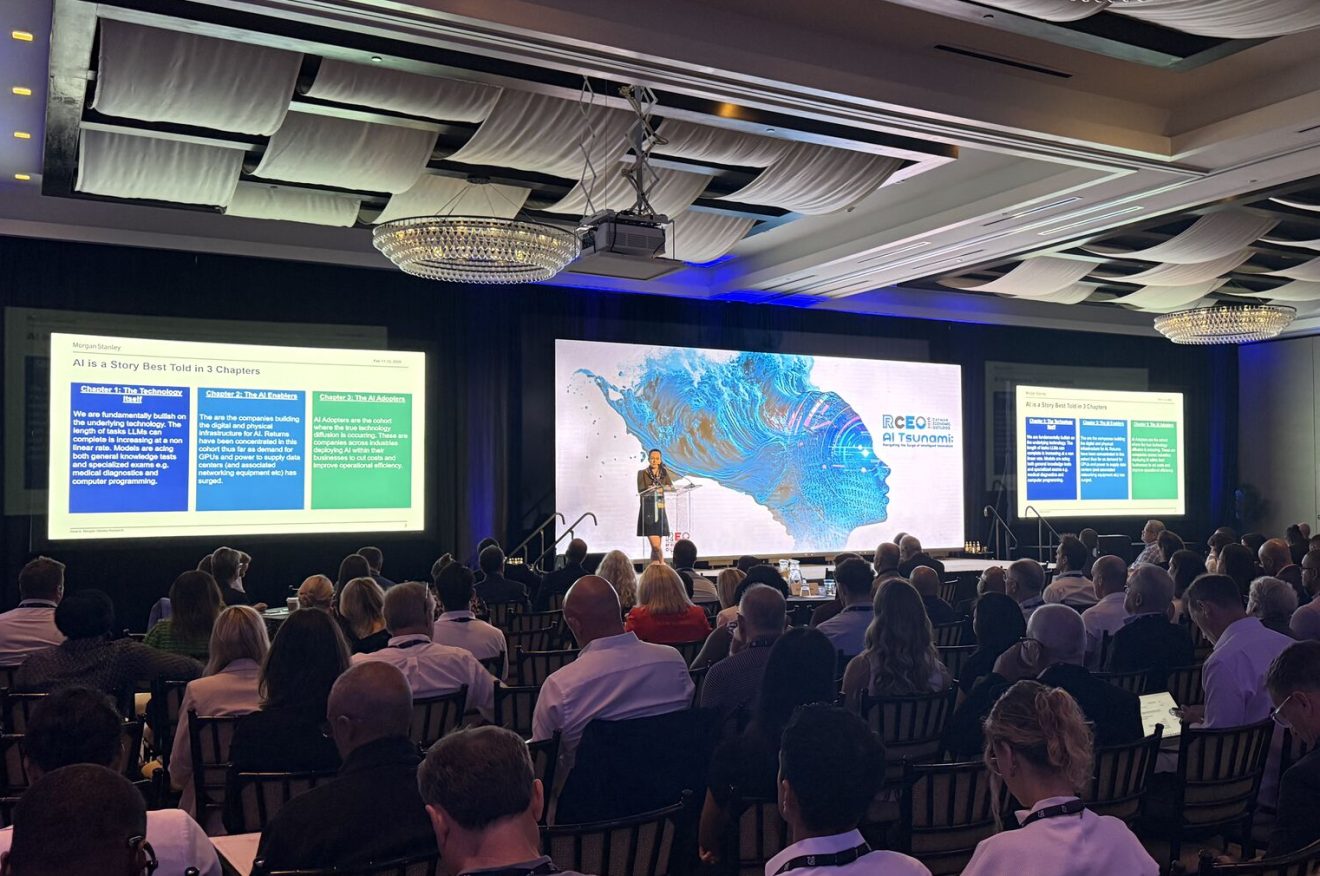
At ReConnect 2026, CIRCA’s annual reinsurance conference in Grand Cayman on April 16 and 17, a dedicated panel on Private Assets in the Insurance Ecosystem will cut through the noise and focus on how practitioners view and evaluate the asset class.
Cayman Finance asked the panel’s moderator, Jennifer Quisenberry, Chief Investment Officer at New England Asset Management, what to expect.
For much of the insurance industry’s history, investment portfolios were built around the principle of matching predictable liabilities with predictable, investment-grade fixed income. That model held up well for decades, but it came under serious strain after 2008, when interest rates collapsed and stayed low for the better part of fifteen years, compressing investment returns and forcing carriers to look elsewhere for yield.
Private assets, including private credit, infrastructure debt, real estate debt, and related instruments, offered a structural solution. Insurance liabilities, particularly in the life and annuity segment, are long-duration and relatively predictable, making them naturally suited to be matched with instruments that cannot be easily liquidated. The illiquidity premium built into private assets – the additional yield that reflects the difficulty of selling them quickly – became an advantage for carriers who could allocate to the asset class within a diversified portfolio. This alignment between long-duration liabilities and long-term assets can support more stable and predictable outcomes for policyholders.

Jennifer Quisenberry, Chief Investment Officer at New England Asset Management (NEAM), says that, at a fundamental level, private credit provides access to the non-bank lending market, financing small- to mid-sized borrowers that are typically below investment-grade quality.
“The challenge for insurers is that exposures rated in the B to CCC range face punitive capital charges,” she says.
However, when these loans are securitised, some structures include a leveraged equity tranche that provides a first-loss cushion, with the larger senior portion of the structure achieving a higher investment-grade rating.
The effect is to make an otherwise inaccessible asset class available within an insurer’s regulatory capital framework. Broadly applied, she notes, these structures create tremendous opportunity to tap into a higher-yielding, diversifying asset class while achieving an attractive regulatory capital treatment for insurers within frameworks designed to protect policyholders.
The convergence of asset managers and insurers followed naturally from that logic. Large alternative asset managers, having built platforms in private credit, infrastructure and real estate, recognised that insurance balance sheets represented a vast and relatively stable pool of capital that could fund those strategies at scale.
Insurers, for their part, gained access to asset management expertise, enhanced returns to meet policyholder obligations and deal flow that their own investment teams could rarely match. The result has been a wave of partnerships, acquisitions and new structures.
The convergence of asset managers and reinsurers has also been a recurring theme at ReConnect since the conference launched in 2024. Two years on, Quisenberry says: “The trend is clearly ongoing. Insurance and reinsurance balance sheets are a tremendous source of capital for long-duration credit strategies.”
In particular, asset managers that offer a differentiated approach, such as a sector/quality focus or duration-matching capabilities, can be attractive to investors, she notes.
The operating environment, meanwhile, has become more demanding. “There’s increased scrutiny from regulators, rating agencies and, from internal constituents, an increased focus on capital efficiency, transparency and governance,” the NEAM chief investment officer says, adding, “It seems that there is more to come.”
The “Private Assets in the Insurance Ecosystem” session takes place on Day Two of ReConnect 2026, on Friday, April 17. Quisenberry moderates a panel that offers a wide range of expertise, bringing together Jeff Day, Managing Director for Private Credit at Morgan Stanley; Rajesh Krishnan, Partner and CIO at Ares Insurance Solutions; Benjamin Alter, Managing Director at EY; and Lindsay Trapp, Partner at Kirkland & Ellis.
“We have a terrific mix of experience and technical expertise which very much reflects the structural complexity of recent developments within the private credit ecosystem,” Quisenberry says. The session will draw on that mix to examine how insurers should evaluate private credit against their specific liability characteristics, what structures are available, and the key considerations for maximising and optimising regulatory capital efficiency, including how these decisions support long-term policyholder security.
The panel, she notes, will take into account that attendees will have varying levels of familiarity with private credit as an asset class.
“The session will have something for everyone, from the benefits and risks to the complex legal and deal structures to achieve investors’ liquidity, duration and risk tolerance objectives.”
The sustained volume of coverage that private credit has received in the financial press adds a further dimension to the session’s purpose. “With the recent and daily attention to private credit in the financial press, the panel can help provide context and viewpoint on the current market narrative,” Quisenberry says.
For delegates whose understanding of private credit has been shaped partly by headline coverage, the panel will offer the practitioners’ perspective on what is actually happening and how they are thinking about it.
ReConnect 2026 takes place on April 16-17 2026 at The Ritz-Carlton, Grand Cayman, Cayman Islands.
Registration and full agenda: Reconnect.ky