The Cayman Islands is rapidly establishing itself as the global centre for decentralised autonomous organisations (DAOs) and Web3 projects, driven by a notable surge in legal entity registrations in recent years.
Figures from the Cayman Islands General Registry show a substantial 70% year-on-year increase in foundation company registrations, typically used to provide legal wrappers for DAOs or to act as stewards for ecosystems in the Web3 space. At the end of 2024, more than 1,300 foundation companies were on the register, compared to 790 the previous year. More than 400 foundation companies have been registered in 2025 so far.
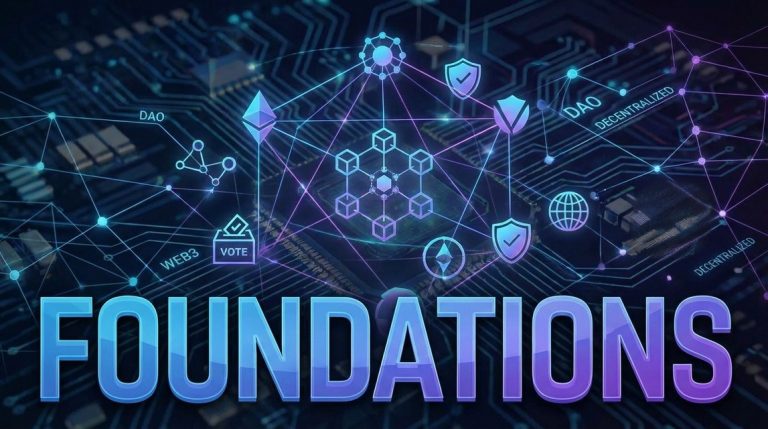
Decentralised Autonomous Organisations are blockchain-based organisations operating via smart contracts without a central authority. Developers encode governance rules, raise funds by issuing tokens, and grant token holders voting rights. Token holders then vote on decisions and resource allocation, with changes requiring community consensus. DAOs are often used for DeFi protocols and social platforms.
“It is no surprise that Cayman Islands-registered foundation companies are surging in popularity, ” said Melissa Lim, partner and co-head of the global Fintech Group at Walkers. “As the digital asset and blockchain sector continues to mature, businesses are increasingly seeking a jurisdiction that combines legal clarity with operational flexibility, giving them confidence to scale responsibly and the ability to attract a wider array of stakeholders. In this respect, the Cayman Islands is clearly setting the standard for secure and innovative governance.”
For many DAOs, the Cayman Islands foundation company has become the favoured solution to interact with the real world. The structure balances the flexibility required for DAO operations with formal legal protections, shielding token holders from personal liability for the DAO’s obligations or legal claims brought against the DAO.
For Web3 projects without DAOs, the Cayman Islands foundation company has also become a popular choice as the legal entity that is used as the steward for the ecosystem to interact with the real world.
Wrapping DAOs has become more popular following developments in US law, particularly the Samuels v. Lido DAO ruling. In that case, a federal judge in the US District Court for the Northern District of California ruled that Lido DAO, which had not established any legal wrapper, qualifies as a general partnership under California law. This exposed Lido DAO members to joint and several liability as general partners under traditional partnership law.
Many of the world’s largest Web3 projects are now registered in the Cayman Islands using foundation companies. There are at least 17 foundation companies registered in the Cayman Islands, each with a treasury of over $100m. The foundations are estimated to hold approximately $10 billion in total assets.
Haymond Rankin, Associate Director for the Fintech and Virtual Asset Sector at Cayman Finance, said the growth of foundation companies registered in Cayman reflects the jurisdiction’s blend of modern legislation, robust professional services and regulatory clarity.
“Cayman foundation companies give DAO communities and Web3 projects the operational flexibility they value, together with the legal certainty global participants expect. This is an essential combination for Web3 projects to move from experimentation to long‑term stewardship of significant treasuries,” Rankin added.
The Cayman Islands’ appeal extends beyond liability protection. The jurisdiction offers tax neutrality, a sophisticated legal infrastructure familiar to institutional investors, regulatory clarity for digital assets, and a well-established ecosystem of professional service providers experienced in blockchain technology.