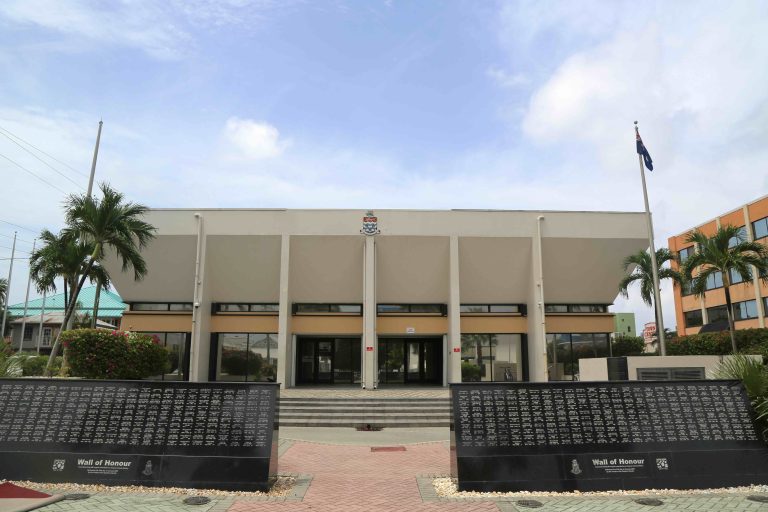
In a judgment delivered on 26 August 2025 (In the matter of the S Trust FSD 249 of 2024 (IKJ)), the Grand Court of the Cayman Islands gave its reasons for setting aside the S Trust pursuant to its statutory Hastings-Bass jurisdiction.
This decision illustrates that the Court’s power under section 64A of the Trusts Act (2021) applies not only to mistaken exercises of power in the course of the administration of a trust, but also to the trustee’s foundational decision to establish the trust itself.
Background
The plaintiff, both the settlor and a beneficiary of the S Trust, applied to set aside the trust and related transactions, contending that the trust’s 2012 establishment was based on a fundamental mistake regarding his UK tax residence. The plaintiff had intended to settle assets on trust before becoming UK-domiciled and exposed to UK inheritance tax (IHT). However, an earlier period of UK residence had been overlooked, resulting in an immediate IHT liability upon settlement of the trust.
Legal framework
Section 64A of the Trusts Act (2021) empowers the Court to set aside the exercise of a fiduciary power where relevant factors were not considered, or irrelevant considerations were relied upon, and where, but for that mistake, the power would not have been exercised (or would have been exercised differently). The considerations in question may be of fact or law, or both.
Notably, the statutory regime does not require proof of breach of trust or duty. Relief may be sought by the person who exercised the power or other specified persons, including a beneficiary of a trust. Section 64A does not expressly permit a settlor to set aside transfers of property into trust.
The Court accepted, however, that: (1) the plaintiff had standing to bring the application in his capacity as beneficiary and (2) the trustee’s decision to establish the trust and accept the assets constituted an exercise of fiduciary power, since such decisions involve the assumption of duties that must be performed for the benefit of others.
The Court referred to its earlier decision (In the matter of Settlements made by Declarations of Trust dated 9 May 2013, FSD 228 of 2023 (IKJ), 28 September 2023) in which it had identified an additional implied requirement of section 64A. Namely, relief can be granted only when the applicant has acted in good faith. In the context of an application seeking to avoid unintended tax consequences, this means the applicant has not deliberately pursued a course of conduct to gain an impermissible tax advantage or other improper benefit.
Section 64A relief is also precluded if it would prejudice a bona fide purchaser for value without notice.
Decision
The Court found that the establishment of the S Trust was predicated on a material mistake: the failure to consider the plaintiff’s earlier UK residence and the resulting IHT consequences. The trustee provided evidence that, had the true position been known, it would not have agreed to establish the trust or accept the trust assets.
The Court was satisfied that the statutory conditions for relief were met and that the plaintiff had acted in good faith. Accordingly, the Court granted relief, setting aside the trustee’s decision to establish the S Trust and accept assets, such that, as a matter of law, these decisions are treated as never having been made.
Specifically, the Court ordered that the trust and certain specific transactions be set aside. It declared that all assets were held on bare trust for the plaintiff from the date of transfer, meaning they were beneficially owned by him at all times. Practically speaking, the trust is treated as if it never existed, though the plaintiff did not seek to (and the Court did not) disturb two charitable donations made pursuant to the terms of the trust.
Notwithstanding the delay between setting up the trust and the making of the application (the reasons for which had been adequately explained), the Court was satisfied that this was an appropriate case for such relief. Among other things, the only distributions from the trust were the two charitable donations and three beneficiary loans (two of which had been repaid).
This decision underscores the Cayman Court’s willingness to remedy genuine mistakes made in the course of tax planning in appropriate cases.
Comparison with other common law jurisdictions
In jurisdictions without a similar statutory regime that rely on the common law Hastings-Bass jurisdiction (as restated in Pitt v Holt [2013] UKSC 26), relief is generally only available if there has been a breach of fiduciary duty.
Since section 64A requires a finding that there has been an improper exercise of a fiduciary power, it may be rare that an application under Cayman’s statutory regime would fail to meet common law requirements.
Nonetheless, section 64A provides certainty with its flexibility and a clearer pathway to relief, including where appropriate (but mistaken) advice has been taken. Moreover, the exercise of a fiduciary power set aside under section 64A is treated as never having occurred, unlike the common law position, where the transaction may be merely voidable.
This article was first published in the Winter Edition 2025 of the STEP Hong Kong Branch Newsletter.

Aleisha Brown is counsel in Campbells’ Litigation, Insolvency & Restructuring group in Hong Kong.