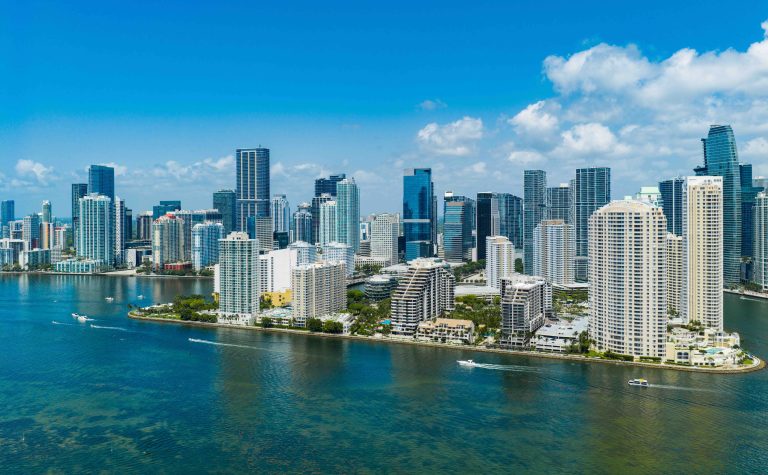
Miami is becoming a hub for alternative investment capital as more high-net-worth individuals and family offices are relocating to Florida. Combined with investors from Latin America this has led to a growing sophistication of the LatAm-Miami-Cayman investment triangle.
Florida and the wider Southeast US are moving “from primary wealth and distribution hub to a genuine centre of capital formation for alternative investments”, a senior KPMG partner told fund professionals in Miami last week.
Nico Whittaker, partner and head of business development at KPMG in the Cayman Islands, said the main driver was the migration of entrepreneurs, family offices and high-net-worth individuals into the region. “They’re not just relocating personally, but they’re also bringing their businesses, capital, investment platforms and decision-making authority,” he said. Florida’s tax environment, he added, was “very conducive” to that.
He was speaking on 30 September at Key Biscayne Yacht Club, at an evening co-hosted by Trident Trust, Cayman Finance, the Florida International Funds Organization and KPMG. The panel looked at the future of the Cayman funds industry, the expansion of asset management in the Southeast US and the growing importance of Latin American investors.
Whittaker recalled auditing funds of Florida-based managers around 15 years ago, when a typical hedge fund ran $25 million to $50 million and he struggled to think of more than one fund administrator active in the area. Today ticket sizes are far larger and many administrators have opened Florida offices, which he said showed the breadth of activity in South Florida. “I don’t think Florida will take New York soon,” he said, “but it’s definitely a growth engine for the alternative space.”
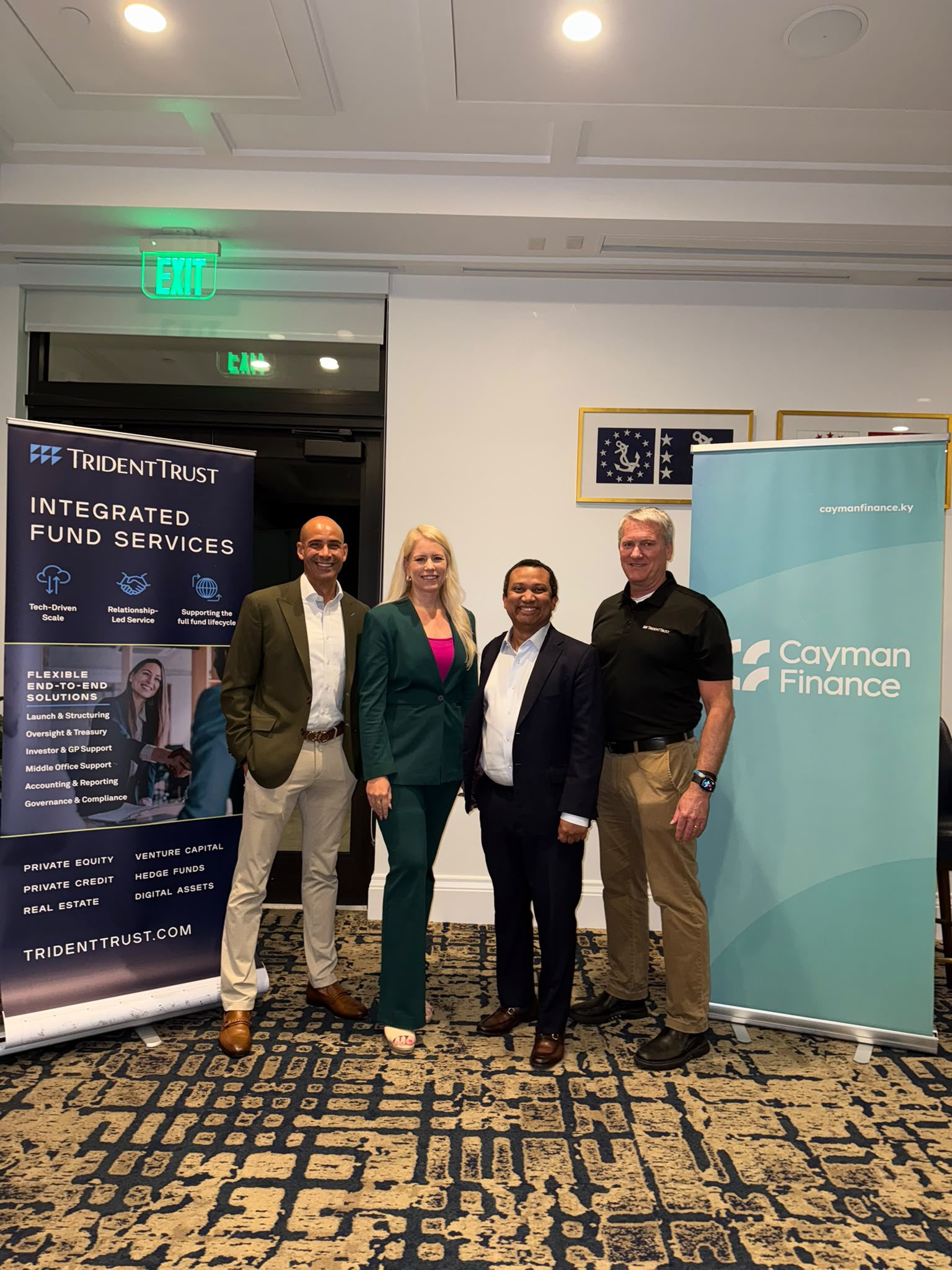

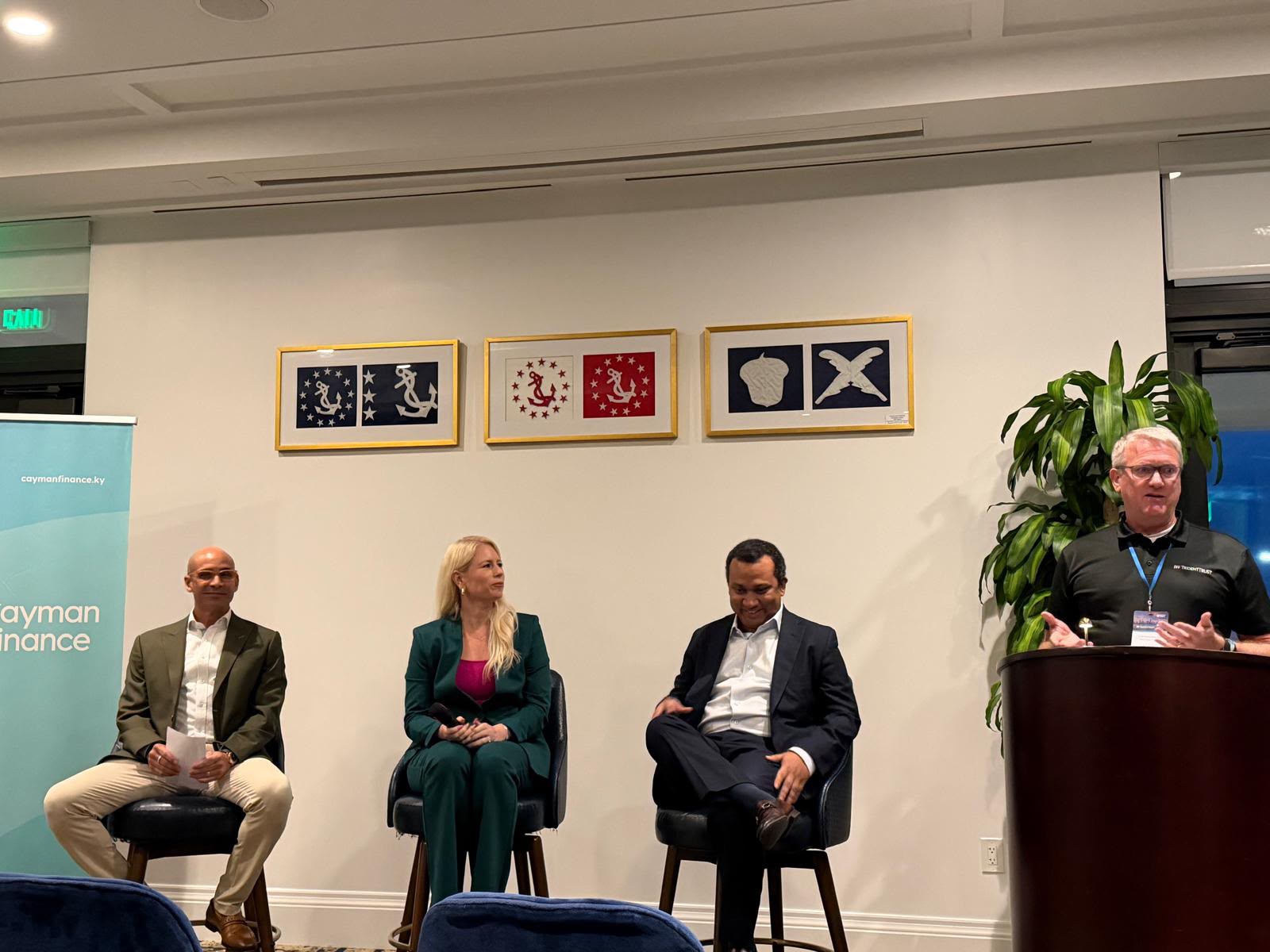
Dan Smith, head of Trident Trust’s fund services group in Atlanta, who moderated, agreed noting that over more than two decades in the industry he had been struck by how things have changed in terms of the increased use of the Cayman Islands and for the city of Miami as a financial hub.
Cayman takes notice
The Cayman industry is paying attention. Samantha Widmer, director and head of funds and capital markets at Cayman Finance, said a survey of the association’s more than 170 member firms, asking which markets mattered most to them, placed Miami in the top five. “It just goes to show that the Cayman Islands is really interested in wanting to grow relationships in this area,” she said.
Widmer said Cayman Finance was looking globally for new business and where the next new fund might be coming from. Alongside Latin America, Asia and the Middle East, she said, much of that opportunity was “in cities like Miami, where we’re seeing an influx of new people”. Whittaker pointed to geography as another supportive factor given that Miami is only an hour’s flight from Grand Cayman.
Latin American capital
Latin American money is a large part of the story. “The interconnectivity between Miami, Latam and Cayman is nothing new,” said Rafael Perez, head of business development at Trident Trust. “The highlight here is the evolution in terms of sophistication of that triangle.”
Perez, who has spent two decades in international fund formation and distribution, said Miami had always played “a huge part” in absorbing flows in and out of the region. But what began as an opportunistic link with Cayman “has become more of a systemic need for most of the investors in Latin America”. He put that down to the predictability of Cayman’s tax neutrality, at a time when other jurisdictions were adding small layers of tax and complexity, and to the simplicity of setting up funds there.
Latin American wealth was not so much migrating as reallocating, he said. Liquid portfolios remained, but “a substantial chunk of those allocations are going into private assets”, typically through aggregator funds and feeder structures. US private markets were the draw, he added. “They want a piece of that pie.”
Cayman at the centre
For investors based outside of the US that access is mostly through the Cayman Islands.
The structures channeling those investments are also changing. Rather than treating Cayman as an offshore sleeve attached to an onshore fund, Perez said, conversations with mature managers increasingly centred on how can we set up that master fund in Cayman and “how can we connect the world to that fund”. When he started his career, “it was the other way around”, he said.
Widmer said that flexibility mattered because a manager might not know at launch that, five years on, it would want feeders from other countries to meet particular investors’ needs. “It’s now becoming more the hub for everything,” she said. Cayman has more than 31,000 registered funds, she noted. Official figures put the total at 31,145 at the end of June.
On cost, she argued that Cayman’s governance, anti-money laundering and audit requirements were what kept it off international negative lists and open to capital. “There is a cost to compliance, but I think what you get for that is a very well-oiled machine.”
In that context, Smith cited a client that had tried a competing jurisdiction and “spent several hundred thousand dollars and never got their fund launched”.
What comes next
In response to a family office adviser in the audience who works with Latin American families and asked whether Cayman should pursue higher-volume, almost retail-style products, Widmer was cautious. “I’m not sure we’re doubling down on retailisation,” she said. Instead, she pointed to platforms emerging in Latin America, including Brazil, that pool capital before investing through Cayman funds.
Perez called retail access inevitable but said the market was not ready, while Whittaker suggested tokenisation, under Cayman rules that took effect in March, could eventually help.
Widmer said family offices were one of three growth priorities for the Cayman Islands government over the next five years, alongside digital assets and insurance and reinsurance. Cayman already hosts more than 200 family offices, and their needs will grow “because families are becoming more global”.
With little cash coming back to investors from existing funds, she said, new allocations were “going to be coming from other places: family offices, insurance and reinsurance companies”.
For a city that has drawn many of those families, that points to more business ahead.
Perez’s advice to the managers in the room was: “Predictability and simplicity. Keep those two things in mind.”