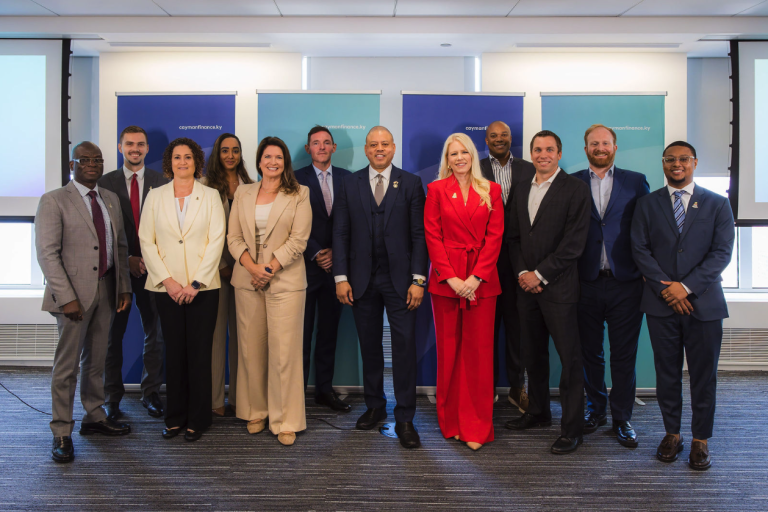
The Cayman delegation and panellists in Chicago on 11 June.
The Cayman Islands is building on its strong market position in offshore investment funds by expanding into tokenisation, and other growing set of adjacent industries, senior industry figures said at a panel discussion hosted at KPMG Chicago and organised by Cayman Finance.
Often regarded as synonymous with investment funds, Cayman now hosts more than 30,000 registered mutual and private funds. But panellists pointed to a jurisdiction that is no longer defined by funds alone. A new wave of interest from family offices, insurance and reinsurance providers, and digital asset businesses is reshaping the competitive landscape, even as the core funds business remains the backbone of Cayman’s offering.
Over the years, the Cayman Islands has solidified its market position amid intense competition. Panellists described a jurisdiction that has learned, over three decades, to stay ahead of investor demand without abandoning the principles that made it the world’s leading offshore fund domicile.
Anne Storie, Head of Funds at Highvern, who has worked in Cayman for 21 years, said the competitive landscape had shifted markedly since she arrived in 2005. She pointed to tokenisation as a case study in how the jurisdiction identifies emerging trends early and builds legal clarity around them without compromising on investor protection.
Cayman’s evolution as a funds domicile was backed by substantive regulatory reform. The introduction of the Cayman Islands Monetary Authority’s Fund Governance Rule, which formalised standards around board oversight, governance procedures and director effectiveness reviews, is one example.



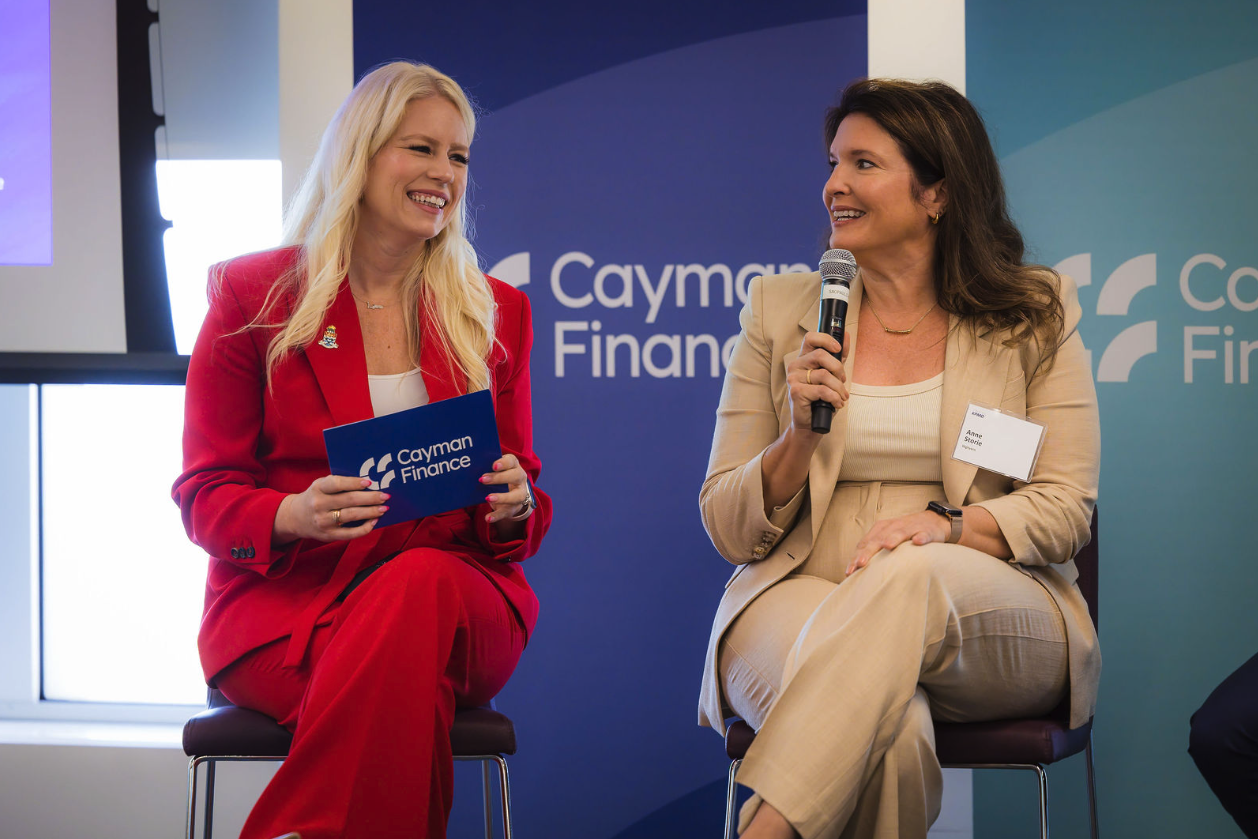







Colm Dawson, a Partner in Walkers’ Regulatory Risk Advisory Group, said the rule had largely codified practices that sophisticated market participants were already observing. The result was a framework rigorous enough to satisfy international scrutiny while remaining proportionate enough not to burden smaller operators. He noted that recent enhancements have, if anything, reinforced Cayman’s appeal to institutional capital.
The data supports that assessment. Walkers research cited by Storie highlighted that approximately 85% of newly launched Cayman funds include independent directors on their boards, a figure that reflects what institutional allocators such as sovereign wealth funds, pension plans, and endowments now treat as a baseline expectation before committing capital.
Gary Harris, a Partner in Walkers’ Insurance Group explained, “Sophisticated investors increasingly see funds and reinsurance as points on a single capital continuum. For Cayman, the opportunity is to let capital move across asset origination, portfolio management and long-duration risk transfer, while ensuring that governance and regulatory strength keep pace, because sophisticated capital follows rigour, not just efficiency.”
Family offices emerge as an underexploited growth area
Beyond traditional institutional allocators, family offices are increasingly viewed as a distinct and underdeveloped growth opportunity for the jurisdiction. As global wealth continues to concentrate in multi-generational family structures, many are seeking jurisdictions that combine flexible fund and holding structures with strong governance and a stable legal system.
“The segregated portfolio company enables capital injection through its ability to legally ring-fence assets and liabilities into isolated cells within a single corporate entity. It offers deal-specific flexibility and rapid execution, without the time and administrative expense of establishing a brand-new legal structure for every transaction,” said David Alison, Managing Director in KPMG’s Actuarial Life practice.
Cayman’s existing infrastructure, originally built around institutional fund managers, is increasingly being adapted to serve family offices structuring direct investments, co-investment vehicles, and private wealth succession planning. Several panellists suggested this segment remains comparatively underpenetrated relative to its potential, particularly as family offices in Asia, the Middle East, and Latin America look for offshore structures that can accommodate both private market exposure and multi-jurisdictional families.
Tokenisation broadens beyond fund structures
Investor demand is also reshaping product development more broadly. Storie highlighted a marked increase in demand for semi-liquid structures, such as evergreen and interval funds, as a broader base of investors seeks private markets exposure while retaining some liquidity.
Tokenisation, she said, offered another route to meeting those expectations, with Cayman well placed to capitalise. Among managers, the questions are increasingly practical in terms of how tokenisation is being implemented, which structures are gaining traction, and which asset classes are being tokenised.
Amendments to the mutual funds and private funds legislation earlier this year ensured that tokenised funds regulated under the funds acts do not need to be separately regulated under the Virtual Asset Services Providers (VASP) Act. Dawson noted that the fundamental legal and regulatory foundations underpinning tokenised assets remained largely unchanged from conventional structures.
Current activity is concentrated in tokenised investment funds, real-world asset tokenisation, Virtual Asset Service Provider licensing, and digital infrastructure businesses. Dawson said his team is currently involved in a number of licensing applications, with growing interest from firms seeking to establish a presence in Cayman.
Historically, much of the investment management activity associated with Cayman structures occurred outside the jurisdiction. By contrast, many virtual asset businesses are establishing meaningful operational presences within Cayman itself, a shift that panellists suggested could meaningfully deepen the jurisdiction’s domestic financial services footprint over time, beyond its traditional role as a structuring hub.
A collaborative model for new frameworks
Tokenisation is also an example of the collaborative model through which Cayman develops its regulatory frameworks. Dawson described it as a case study in how government, regulators, industry and Cayman Finance worked together to provide clarity, producing a framework that market participants can confidently explain and implement.
Samantha Widmer, Head of Funds and Capital Markets at Cayman Finance, who moderated the discussion, echoed the point, noting that industry, “government, regulators, and Cayman Finance are in constant dialogue to ensure new rules and products make practical sense for market participants. That ongoing collaboration,” she said, “remains one of the Cayman Islands’ greatest strengths.”
That framework also gives Cayman a compelling case to make in international markets. Dawson pointed to a combination of factors the jurisdiction can offer clients globally: a trusted legal framework, experienced service providers, a sophisticated regulator, and a willingness to innovate responsibly, which together create a strong value proposition.
Looking ahead: geographic and sectoral diversification
Over the next three to five years, Widmer noted that, “while the United States remains an incredibly important market for Cayman, there are also significant opportunities in jurisdictions such as Japan and across Asia-Pacific, as well at LATAM and the Middle East,” while family offices were also flagged as an underexploited area of growth.
Taken together, panellists suggested that the convergence of tokenisation, digital assets, family office demand, and insurance-linked capital represents a meaningful broadening of Cayman’s value proposition, one that builds on its funds heritage rather than replacing it.
Dawson said the key was to remain nimble. He urged the jurisdiction to keep listening to market participants, describing events such as the Chicago gathering as essential to maintaining competitiveness. The best way to ensure Cayman remains competitive, he said, is to continue listening to the people who actually use the jurisdiction and understand their evolving needs.
The event was attended by a delegation from the Cayman Islands Government and held in Chicago, a city with close ties to the Cayman Islands through its large financial services community.