Technology in private markets has been fragmented across functions, bolted onto legacy models. That era is ending. What the industry needs, and what a new category of platform seeks to deliver, is an operating system for the entire fund lifecycle.
For decades, private markets ran on relationships. Technology was incidental: a CRM here, a spreadsheet there, a fund administration platform bolted on at the end. That model worked when the industry was smaller and simpler.
But regulatory demands have multiplied, investor expectations have risen, and operational complexity has grown faster than the systems designed to manage it. Fragmentation is no longer merely inefficient. It has become a source of genuine operational and compliance risk.
The industry does not need another tool or a marginal upgrade to existing systems. It needs a new category of fund technology: an operating system for private markets that brings together the entire investment process, from deal sourcing to capital deployment and reporting, into a single, connected platform.
This shift redefines how private funds operate and the stakes differ by firm size. For established mid-market managers, fragmentation is a growth constraint. It limits scalability without proportional staff increases. For fund administrators, it means perpetual reconciliation work that crowds out higher-value advisory services. For emerging managers, it raises the cost of entry and sets a ceiling on how quickly they can build institutional credibility. The underlying problem, however, is the same.
The end of fragmentation
Fund operations today are shaped by years of specialisation. Deal teams use CRM systems, or more often just email and spreadsheets. Compliance teams maintain separate KYC/AML platforms. Fund administrators run distinct systems for accounting and reporting. Portfolio monitoring adds another layer. Each system may function adequately in isolation; together, they produce a fragmented architecture defined by duplicated data, disconnected processes and limited visibility.
The same company, investor or counterparty may appear in several systems with conflicting records. Documents are held in different places. Approvals are tracked in email threads or offline. By the time a deal moves from sourcing to execution, it has passed through many disconnected steps, each carrying the risk of error, delay, or inconsistency.
Fragmentation operates as a hidden tax on the industry. It slows deals, raises costs, and generates compliance and governance exposure. More fundamentally, it prevents firms from learning from their own data. Without a unified view of the investment process, insights remain siloed and decisions are made without the full picture.
From systems to fund operating systems
The concept of a fund operating system represents a genuine shift in how private markets technology is conceived. Rather than improving each function in isolation, a fund operating system connects them. It creates an environment in which all data, processes, and workflows are integrated and continuously current.
In this model, deal origination is the entry point for the whole lifecycle, not a standalone function. Investor onboarding belongs to the same data flow. Compliance and due diligence are embedded controls that evolve alongside the investment. Risk assessment is continuous and data-driven. Capital activity, allocations and reporting are connected outputs of the same system, not reconciled artifacts from different platforms.
This changes how firms work in concrete ways. It eliminates redundant data entry. It enforces process consistency. It provides real-time visibility across every deal, investor and portfolio asset. And it enables governance and audit capability that fragmented architectures cannot match.
Deal origination
When systems are fragmented, deal origination is largely informal. Opportunities arrive through emails, calls and introductions and are tracked inconsistently. There is little standardisation in how deals are assessed, and little connection to downstream processes. Information gets lost. Decisions get made on incomplete data.
A fund operating system transforms origination into a systematic, data-driven process. Every opportunity is captured, enriched and linked to the firm’s investment criteria. Screening is applied consistently, and early risk signals, such as domicile issues, ownership structures and counterparty flags, are surfaced promptly rather than discovered late.
The focus moves from managing relationships to managing information and the insights that flow from it.
Investor onboarding
Investor onboarding is among the most demanding operational processes in private markets. It requires gathering and verifying documents, conducting KYC/AML checks, assessing risk and satisfying regulatory requirements. In many firms, it is fragmented: data and documents are collected multiple times across different systems, creating delays, inconsistencies and compliance exposure.
With a fund operating system, onboarding is integrated into the broader lifecycle. Investor data is collected once and flows wherever it is needed. KYC/AML checks are initiated early and kept current. Risk assessments are tied to both the investor and the specific investment, providing a coherent picture of exposure rather than two separate snapshots.
Compliance and due diligence
Compliance and due diligence are typically treated as discrete steps. In fragmented environments, they are managed through checklists, documents and manual workflows that exist outside the investment process proper.
This approach is under increasing pressure. Regulatory requirements are tightening, cross-border investments are multiplying and institutional investors are demanding demonstrable, documented governance. Firms need not only to conduct due diligence but to show that it was done consistently and completely.
A fund operating system embeds compliance and due diligence throughout the lifecycle. Screening, CDD checks and risk assessments are part of the workflow, triggered automatically at the appropriate stage. Results are stored in structured formats, linked to the relevant parties and investments, and carried forward at each step.
Risk assessment
Risk assessment in private markets has traditionally been episodic. It is conducted at due diligence and revisited at defined intervals. That cadence does not reflect how risk actually evolves in a global, interconnected market, where conditions can shift between reporting periods.
A fund operating system enables continuous risk assessment. Data from across the lifecycle — origination, onboarding, compliance, portfolio performance — is integrated and monitored in real time. Changes in risk profiles are identified early. Where thresholds are breached, appropriate actions can be triggered automatically rather than discovered in the next quarterly review.
As a result, risk management becomes a forward-looking capability.
Capital activity
Closings, calls, distributions and transfers are the mechanical core of fund operations. In many firms, they are managed through a combination of spreadsheets, emails and accounting systems with limited integration to the deal and investor data that drives them. The result is reconciliation overhead, manual approval tracking, and the persistent risk of errors with financial and reputational consequences.
A fund operating system connects capital activity to the broader lifecycle. Capital events are linked to deals, investors, and portfolio assets. Approvals move through structured workflows. Data flows directly into accounting and reporting without manual translation.
Allocations and reporting
Reporting is where fund operations become visible to investors and regulators. In fragmented environments, it is typically a labour-intensive process, consisting of aggregating data from multiple systems, reconciling discrepancies and producing documents that may already be partially outdated by the time they are distributed.
A fund operating system transforms reporting into a natural output of the lifecycle. Because all data exists within a single environment, reports can be generated in real time with confidence in their accuracy. More importantly, the underlying data can be interrogated to produce insights into performance trends, risk concentrations and operational efficiency. It becomes the type of analysis that is difficult or impossible in fragmented systems.
The path forward
The transition to a fund operating system is not without friction. It requires a change in mindset, a genuine commitment to data quality, and a willingness to rethink processes that have accumulated over years. It may mean replacing legacy systems and redefining roles within organisations that have been built around functional silos.
However, the alternative, continuing to operate fragmented systems, is increasingly difficult to justify.
As the industry gathers at events like GAIM Ops in Cayman, the conversation is shifting. The focus is no longer on individual tools but on how those tools fit together. The question is not whether to modernise but how to do so in a way that creates durable operational value rather than adding another layer of complexity.
The firms that succeed will be those that recognise integration as a strategic requirement: the foundation on which scalable, transparent and resilient fund operations are built.
A new foundation for private markets
The private markets industry runs on trust between managers and investors, between firms and regulators, and within organisations themselves. That trust depends, increasingly, on the integrity of data and the robustness of the processes that generate it.
A fund operating system provides the infrastructure for that integrity. It creates a coherent, connected environment in which every part of the investment lifecycle is visible, every process is consistent, and every decision is informed by complete information rather than a partial view assembled from disconnected sources.
The distinction between front office and back office has always been partly artificial and a product of legacy systems that forced a division between origination and execution, between compliance and portfolio management. A fund operating system bridges that divide. The firms that understand this first will have a structural advantage. The rest will be catching up.
For more information on Longshore Labs and its ALPINE-OMEGA platform visit the company’s website.
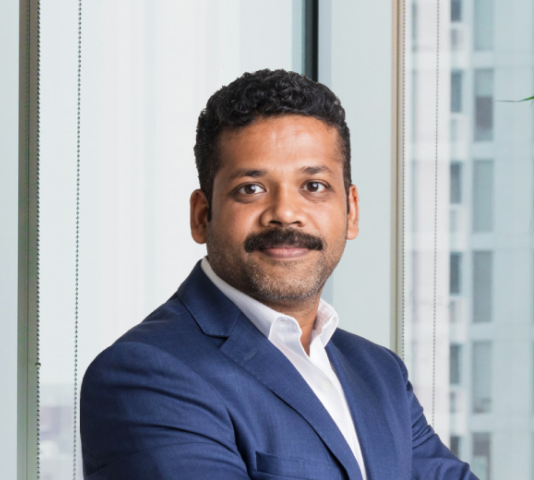
Lenin Kumar Perumalsamy, the founder of Longshore Labs, is a visionary in software development with over 22 years of experience in Alternative Investments.